
The iconic male tiger, admired by thousands of tourists and feared by rivals, reportedly died after a fierce clash in the Khitauli range. Bandhavgarh National Park has lost one of its most recognizable and beloved tigers. Pujari (priest in English) , the majestic male who ruled hearts as much as territories , is believed to have died following a violent territorial clash with D1, another dominant male from the Khitauli range. Tourist guides noticed his sun-salutation poses at water bodies and a priest like calm in the cat, giving him the moniker. For wildlife lovers and regular visitors to Bandhavgarh, the news marks the end of an unforgettable chapter in the park’s rich tiger history. Several WhatsApp groups of tourists, guides, and wildlife enthusiasts have been flooded with tributes to the iconic tiger. While many stories circulating after Pujari’s death may not fully conform to scientific wildlife interpretations, they reflect the immense popularity of the big cat and t...
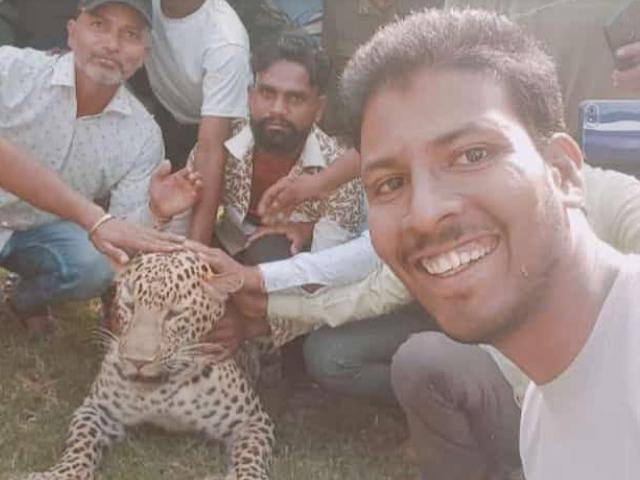
Over fifty people in a village of central Indian state of Madhya Pradesh risked their life as they played around an ailing leopard .The leopard was spotted in an isolated area of Eklara Mata village, about 70 kms away from the district headquarter of the industrial town of Dewas on August 29. The spotted cat is suffering from some neurological disorder which may have been caused by rabies of canine distemper virus. Though the villagers did not harm the animal, they were exposed to the animal bite as they fondled the animal, sat around it and tried to even have a ride before taking selfies.
Leopard Ride ?

Videos taken by them raise many serious questions. Who is actually the animal? The people taking selfies and having fun with the hapless spotted cat as they yelled, whistled, jostled to play and to shoot videos and images from mobile phones. But beast that seemed to have lost its animal instinct because of the ailment did not react. People living around the forest fringes need to develop sensitivity towards wild animals for their own safety.
Also Read: Shhhh - Leopard is watching you
Those involved in the wildlife conservation also have this huge task to sensitise them. The place where the leopard was found has a patch of forest on the banks of Kalisindh river. When the villagers first spotted the animal, they were scared of it. But soon they realized that the leopard was not at all reacting to their presence, said a forest department official in Dewas. They did not harm the leopard and informed us, he said adding, the leopard was soon rescued from them and was sent to Indore zoo. The leopard had a fever and would undergo veterinary tests on August 31. The tests could not be conducted because of public holiday on August 30.
Risking Life

Vikas Mohre, superintendent of the Kheoni sanctuary in Dewas, about 70 kms away from the place where the animal was spotted said that the leopard seems to have some serious neurological problem because of some infection. He suspects it could be rabies or canine distemper. The latter is a contagious and serious disease caused by a virus that attacks the respiratory, gastrointestinal and nervous systems .
Also Read: Drones, Dogs Help Catch Cheetah Nirva In Kuno
Both the infections are caused by dogs. The superintendent said, “ the villagers risked their life. Imagine what happens when a dog with rabies bites a man. What if the leopard had bitten any of the villagers? “. He said that people should stay away from wild animals in case they spot them anywhere and inform the forest department. According to the leopard census of 2018, Madhya Pradesh is home to 3,421 leopards, the highest in the country. The latest report is yet to be released. Dewas district has a population of over 100 leopards.
From Deshdeep Saxena
Comments
Post a Comment